Low Power FM was built for communities that had been priced or pushed off the FM band. The license is real. The signal is real. And so are the day-to-day problems that come with keeping a small, non-commercial radio station running, week after week, year after year, on a shoestring and a handful of volunteers.
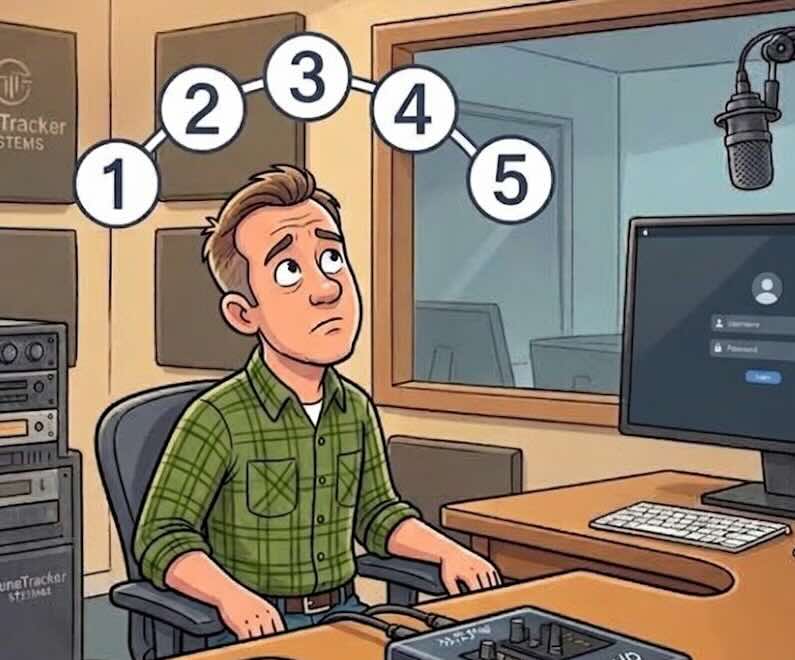
What follows are the five challenges LPFM operators talk about most. None of them are deal-breakers — thousands of LPFMs are on the air and have been for more than a decade. But they're real, and the stations that last tend to be the ones that take them seriously early.
1. Money
This one is always first, and it isn't close. LPFM stations are non-commercial by law — they can't sell advertising. They can solicit underwriting (acknowledgements of donors and sponsors, without calls to action or price information), and they can take donations, grants, and sometimes a contribution from a parent organization. That's the income side. The expense side is longer.
A typical LPFM has tower rent or antenna-site costs, electric for the transmitter, insurance, music licensing (ASCAP, BMI, and SESAC each bill annually, and SoundExchange too if the station streams), public-file hosting, occasional engineering, the EAS box, equipment replacement, and — if there's a physical studio — rent, internet, and utilities for that as well. None of it is enormous on its own. All of it together, every month, adds up to a real number.
Most LPFMs get there with a mix of small recurring donors, a handful of underwriters, the occasional grant, and a once-a-year fundraiser. The stations that struggle financially almost always have one thing in common: nobody on the board or in the volunteer pool is actively doing fundraising work. The signal goes out, the bills come in, and the gap widens. Stations that survive long-term have somebody — even part-time, even volunteer — whose job it is to ask.
2. Volunteers — and Burnout
The second challenge is the one that quietly takes stations down. LPFMs are almost always volunteer-driven, and the energy that gets a station on the air is usually the energy of one or two committed people. That energy is finite.
The first year is exciting. The construction permit, the equipment install, the first broadcast, the open house. The second year is work. The third year is when the founder starts to wonder what they signed up for. Volunteer burnout is the single most common reason an LPFM goes from active to silent, and the second-most-common reason is a leadership transition that didn't go well — the founder steps back, nobody steps up, the station drifts.
The stations that last past year three tend to do three things. They build a board, not just a personality. They train more people than they think they need, knowing that most of those volunteers will only stick around a year or two. And they protect the founder — carving out time off, splitting the most thankless tasks, making sure no single person is irreplaceable.
3. Filling the Schedule
A radio station is 168 hours a week. Every week. Forever. That math doesn't change when the volunteers are tired, when the music director moves out of town, when the local-news host has surgery. The clock keeps turning.
Most LPFMs end up with a mix: some live shows, some voicetracked or pre-recorded programs, some automation, sometimes a syndicated overnight feed. There is nothing wrong with that mix, and the most successful community stations are honest about it — they pick the hours where local matters most (drive times, weekday mid-mornings, weekend mornings) and make sure those hours are alive. The rest of the schedule is filled in a way that's sustainable.
The temptation, when the local well runs dry, is to take an all-syndicated feed and let it run twenty-four hours. It solves the schedule problem completely. It also tends to dissolve the reason the station exists. The LPFMs that have lasted twenty-plus years almost all have a clear answer to "what makes us local?" — and a structure that protects those hours even when everything else is hard.
4. Signal and Interference
The fourth challenge is the one operators are least able to do anything about. LPFM is capped at 100 watts effective radiated power, with antenna-height limits to match. Under good conditions, that gives a reliable signal for a few miles. In hilly terrain, on the wrong side of a ridge, or inside a city center, it gives less.
The more frustrating piece is that LPFM stations have no protection from interference caused by full-power stations. A full-power station that decides to move its transmitter closer can degrade an LPFM's coverage, and in the worst cases the FCC will order the LPFM to vacate the frequency entirely. The post-2013 wave of FM translator filings — mostly for AM stations rebroadcasting on FM — squeezed the available spectrum in many cities further. Some of the LPFM applicants who filed in the 2023 window walked away with frequencies that were technically licensable but not actually clear.
Most LPFMs live with some degree of imperfection in coverage, and most have learned to compensate — a clean stream as a secondary distribution channel, careful attention to where the actual audience sits versus where the contour map says they should, and a friendly relationship with the engineers at neighboring stations.
5. Compliance and Continuity
The fifth challenge is the steady drumbeat — the unglamorous administrative work that an LPFM license actually requires. The public file has to stay current. EAS tests have to be logged. License renewals roll around every eight years, and biennial ownership reports show up between them. The 365-day silent rule means a station can't be off the air for more than a year total in any four-year period without losing its license.
The equipment side has its own drumbeat. Transmitters fail. Tower leases come up for renewal, sometimes with new owners who aren't interested in continuing them. Hard drives die. The studio computer that's been running the automation for eight years finally gives up at 3 a.m. on a Sunday.
None of this is dramatic on its own. All of it together is the reason LPFMs need more than just on-air people — they need somebody who keeps the binder, watches the calendar, and replaces the things that break before they take the station off the air. The stations that have lasted have made that role explicit, even if it's filled by a volunteer in their living room with a spreadsheet.
How the Long-Lasting Stations Get Through It
There's no secret. The LPFMs that have made it twenty years aren't lucky — they're disciplined in a small handful of ways the rest aren't. They have somebody actively raising money. They have a bench of volunteers and a plan for the day the founder steps back. They've decided which hours of the schedule are protected and which are filled. They've made peace with their coverage and built a stream to extend it. And they have somebody keeping the paperwork, the logs, and the equipment list current — not as an afterthought, but as a real job.
None of those things are dramatic. None of them require money the station doesn't have. They're habits, mostly. And the stations that build them in the first two or three years are the stations still on the air in the second and third decade.
Running an LPFM? Let's talk.
TuneTracker offers a special discount for Low Power FM stations — the full Mac-native automation suite, priced for community-radio budgets. Contact us for the details, or download the free version and try it out first.
Contact Us About the LPFM Discount